
Once again, PBS did not present viewers with the full set of facts and framed the story in a way that distorted events from the start.
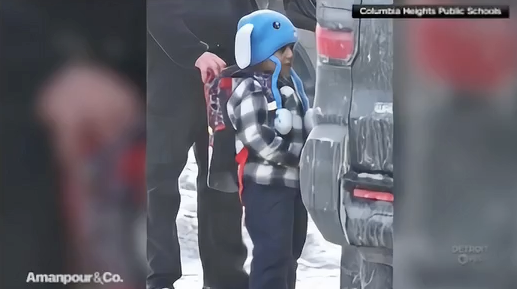
PBS opened by telling viewers that “even children are getting caught up in the surging ICE tactics there,” introducing a five-year-old boy as proof that immigration enforcement was cruel. Viewers were told the child was “detained” with his father, immediately suggesting misconduct by federal agents.
According to the Department of Homeland Security, the child was not arrested and was not the target of enforcement. ICE agents were attempting to arrest the child’s father when the encounter escalated. DHS says the father fled, leaving the child behind in cold conditions, and agents remained with the child to ensure his safety.
PBS then added that the father had a “pending asylum case,” implying that enforcement should not have occurred.
However, a pending asylum claim does not automatically confer legal status or guarantee immunity from enforcement. Individuals with pending cases may still be subject to arrest or removal, particularly during an active enforcement action. In this case, DHS has said agents were executing an arrest and the father ran when approached by officers, which escalated the encounter and required agents to secure the child’s safety. PBS did not explain this distinction, leaving viewers with the impression that ICE violated the law simply by acting.
DHS further stated that officers made multiple attempts to place the child with his mother and explicitly assured her she would not be detained. She refused to take custody. DHS says the father requested that the child remain with him. Agents followed standard procedures used across administrations when children are present during an arrest.
None of this context was explained to PBS viewers.
Instead, the segment moved quickly from the child to outrage and protest, then elevated clergy commentary to frame immigration enforcement as a moral emergency. The program offered no legal analysis, no explanation of ICE procedures, and no acknowledgment that agents are required to safeguard children when parents flee or refuse custody arrangements.
PBS then presented an Episcopal bishop as a moral authority and allowed him to warn of moral breakdown and tyranny.
Later in the segment, PBS referenced the bishop’s remarks at a vigil for Renee Macklin Good, describing her only as an “American woman” fatally shot by an ICE agent. But Good was shot after ignoring lawful commands and driving her SUV toward an ICE agent, placing the officer in immediate danger during an active enforcement operation. That context was not disclosed to viewers.
Finally, the bishop stated, “I’m not an activist.” Yet he appeared on national television, condemned federal law enforcement, invoked tyranny, urged clergy mobilization, and framed immigration enforcement as a moral crisis.
Transcript:
Christiane Amanpour:
Now as Trump’s immigration crackdown continues in Minnesota, even children are getting caught up in the surging ICE tactics there.
This is a five year old Liam Ramos, a preschooler who was detained with his father in their driveway on Tuesday. This despite having a pending asylum case according to their attorney, he’s one of four young kids who’ve been detained by ICE in Minnesota over the past two weeks.
As outrage grows and protesters, face off against ICE, Bishop A. Rob Hirschfeld has called on all the clergy to stand up for the vulnerable. And he spoke to Michel Martin about the power of speaking out at this critical time.
Michel Martin:
Thanks, Christiane. Bishop Hirschfeld. Thank you so much for speaking with us.
Bishop Hirschfeld:
It’s wonderful to be here. Thank you.
Michel Martin:
So you, you oversee congregations across New Hampshire, um, and I’m sure you travel even more widely beyond that. I mean this is the moment that’s very, um, I don’t know how to describe it, polarized. That’s one of those words that comes to mind.
You know some people are very supportive of the aggressive actions that this administration is taking. Other people are deeply shaken by it, deeply disturbed by it and feel morally challenged by it. So as you talk to your congregants, what are they telling you?
Bishop Hirschfeld:
What they’re saying mainly is, setting aside any policy differences, is they’re expressing deep and profound grief, frustration, and sadness at the polarization among us and within us and this sense of splintering that’s happening within their communities. They’re, they’re talking about no longer being really able to talk with their neighbors.
What Timothy Snyder once wrote about in that little book on tyranny, taking lessons from the 20th Century, that what one thing that happens is that neighbors become suspicious of one another. You don’t know what where they stand, and you don’t know if you’re gonna be vilified because you’ve been labeled Liberal or conservative, Republican or Democrat.
And I think people have been coming to the Episcopal Church because generally we, we wanna learn how to be neighbors again. And it’s been something that, that has been a hallmark of our congregations for generations, maybe to the point of maybe not appearing at all relevant or having any kind of traction in the society. We’re not typically engaged in the polemics, but we’re showing up with greater numbers.
I’m definitely hearing that.
Michel Martin:
Well, you came to national attention after remarks you made at a vigil for Renee Macklin Good, who’s the American woman, you know wife, mom, mom of three who was fatally shot by an ICE agent earlier this month.
So the first thing I wanted to ask is what brought you to that vigil here.
Bishop Hirschfeld:
I’m not an activist.
He’s not an activist. That’s why the bishop is on PBS calling for clergy to stand up for illegal aliens and against the Trump admin and ICE while implying they’re tyrants.
This is the bishop who told the clergy of the Episcopal Diocese of New Hampshire to have their affairs in order to make sure they have their wills written because it may be that now is no longer the time for statements, but for us, with our bodies to stand between the powers of this world and the most vulnerable.
Watch On YouTube
Watch On Rumble: