
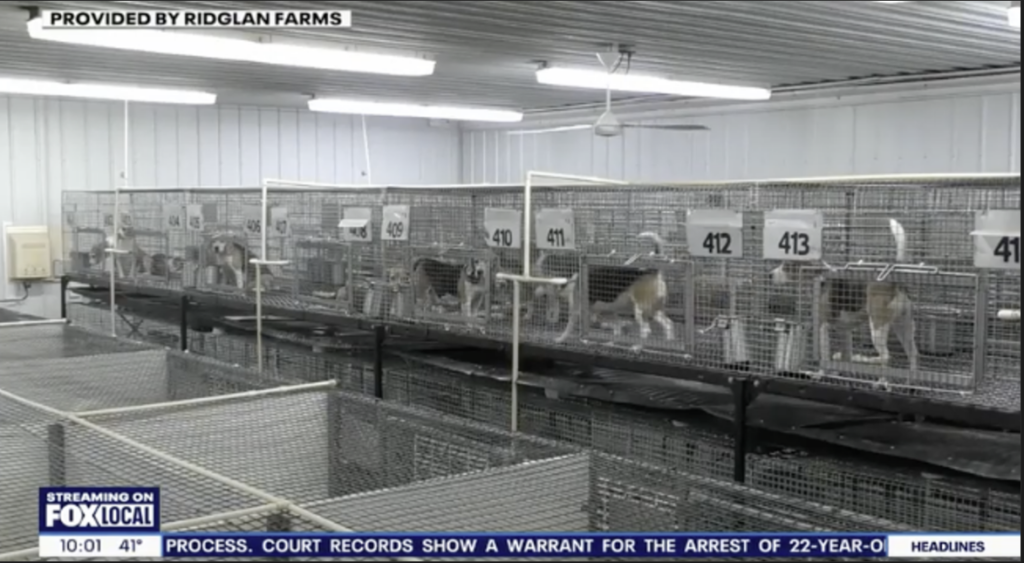
Ridglan Farms bred beagle puppies in Blue Mounds, Wisconsin, for scientific research for more than 60 years. In 2024, former employees testified about the conditions at the farm and revealed that painful “cherry eye” surgeries were routinely performed by non-veterinarians without pain relief.
In labs, the dogs can face procedures such as forced inhalation of experimental drugs, vaccine testing, tick infestation trials, repeated blood draws, dosing through stomach tubes or injections, invasive surgeries, and eventual euthanasia followed by autopsy.
In January 2025, a Dane County judge ruled there was probable cause that Ridglan Farms had committed animal cruelty crimes. However, the special prosecutor assigned to the case decided not to file criminal charges. Instead, he reached a settlement that lets the facility avoid prosecution as long as it surrenders its breeding license by July 1, 2026.
State records show the farm has racked up hundreds of violations. Wisconsin officials cited Ridglan Farms for more than 300 violations related to animal care and facility standards. Lawsuits, inspections, and advocate reports have also detailed untreated wounds, surgeries allegedly done without anesthesia, and other serious lapses.
Animal advocates argue these dogs endure far worse than mere confinement. They describe lives marked by long-term isolation in kennel-style enclosures, constant stress and fear, minimal human contact, and no exposure to grass, sunlight, or normal companionship — all ending in painful experiments and death.
Facilities like Ridglan operate nothing like normal dog environments. The beagles are kept indoors on specialized flooring that lets waste fall through into collection pits below. Many spend their entire lives in these barren systems with little space and no access to the outside world.
The controversy exploded in 2026 when activists entered the property, removed dogs, and were arrested on felony charges. Some activists now face serious criminal charges, including felony burglary, theft, and criminal trespass.
Prosecutors argue that the actions constituted illegal break-ins and theft of private property, since the dogs are legally owned by the facility. If convicted, some activists could face prison sentences of up to 12 years.
The raids drew national attention and sparked large protests, including one involving roughly 1,000 demonstrators in April.
Shortly after, animal welfare groups including Big Dog Ranch Rescue and the Center for a Humane Economy negotiated the transfer of about 1,500 beagles — one of the largest rescues from a U.S. research breeding facility in years. Several hundred dogs still remain at the site.
Ridglan Farms has denied any wrongdoing and claims it follows all state and federal regulations.
As these rescued beagles begin new lives in adoptive homes, the fundamental question remains: Should dogs — animals we commonly regard as family members — continue to be bred, confined, and used in laboratory testing at all?