
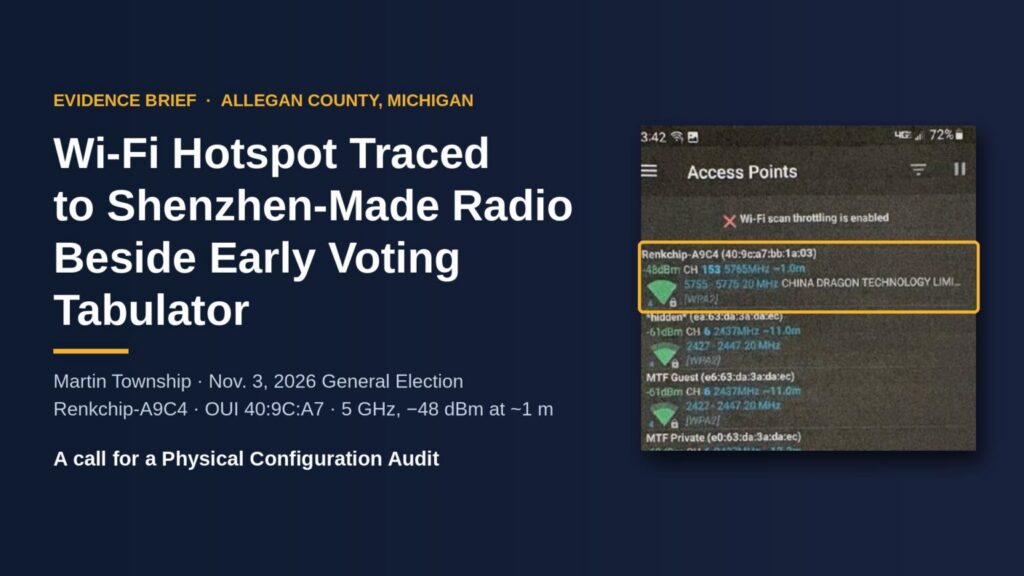
Read the full report at https://electioncrimebureau.com/hotspot/
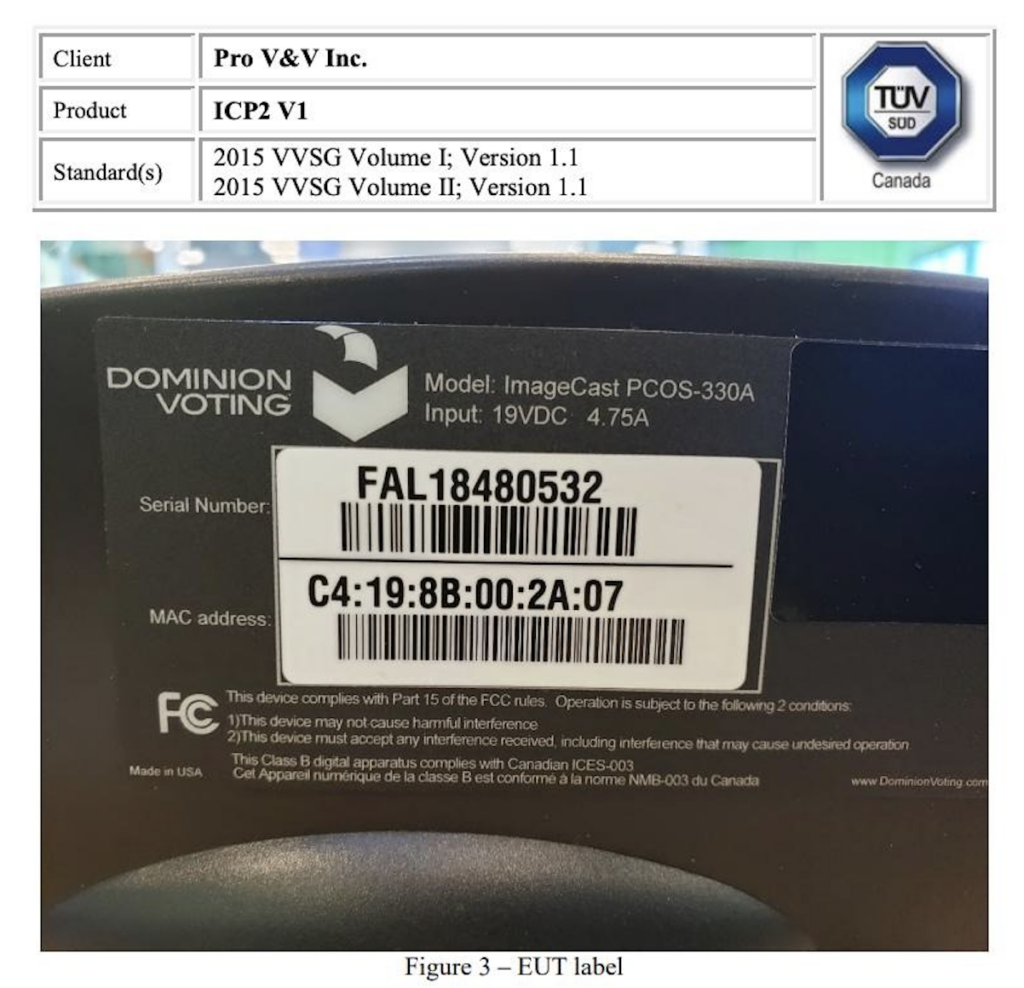
Former Michigan State Senator Patrick Colbeck wrote the following on X:
@pjcolbeck
There has been quite a bit of discussion regarding evidence of machine-based algorithms in the #2026Election results.
Being an engineer, I believe it is important to examine how such an algorithm would be implemented.
So, when evidence of Wi-Fi hotspot inside the Martin Township, Michigan early-voting site was brought to my attention, I did some digging. A summary of my findings has been documented in a report that has been shared with local, state, and federal officials. Among many other findings, this report identifies a hardware-address prefix registered to a manufacturer in Shenzhen, China.
Here’s the issue in plain English:
Detecting Wi-Fi is like hearing a phone ring nearby. It tells you something is transmitting—not whose device it is, what it’s connected to, or what it’s doing.
The questions that matter:
What device produced the signal?
Was the device connected to election equipment?
Was the election equipment tied to the Wi-Fi device modified in any way from the certified configuration?
Were there any communications involving the election equipment prior to 8pm on election day?
A manufacturer’s location doesn’t answer those questions.
Neither does the detection of a Wi-Fi signal at a polling location.
A Physical Configuration Audit (PCA) does.
Preserve the equipment and logs.
Identify the device.
Publish the findings.Any election certified on the basis of election results generated by non-certified election equipment not subject to public examination does not pass the sniff test.
Voters deserve answers that can be checked—not allegations or assurances they have to take on faith.
#ElectionSecurity #2026Election
Find a summary of my findings in the following Election Crime Bureau post:
https://electioncrimebureau.com/hotspot/